GiGi’s Playhouse Sacramento Builds Independence and Belonging, One Opportunity at a Time

For Jasmine, making an omelet is a familiar morning routine. At GiGi’s Playhouse Sacramento, that everyday skill became an opportunity to teach.
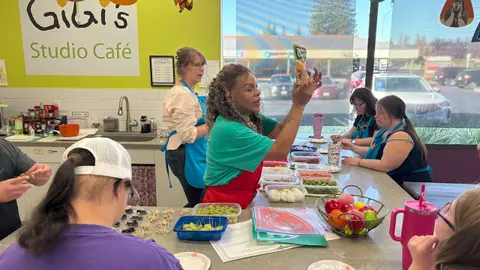
Working alongside her mother, Misha, Jasmine helped show her peers how to prepare omelets during a cooking program. The experience brought together reading, following directions, communication, and leadership. It also ended with something equally valuable: friends sitting down to share a meal.
That combination of practical learning and personal connection runs throughout GiGi’s Playhouse Sacramento, a Down syndrome achievement center in Roseville. Its programs serve individuals from infancy through adulthood, with every program offered free to participating families.
A Community Built by Families
GiGi’s Playhouse began when founder Nancy Gianni sought more opportunities for her daughter, GiGi, who was born with Down syndrome. She created a place where individuals could develop their abilities and where cost would not prevent families from participating.
Sacramento’s Playhouse grew from a similar determination.
A local startup team came together in 2018 and spent three years building support, raising funds, and preparing to open. Nicole Harrigan, whose son Nicholas has Down syndrome, was part of that original group. The doors opened in 2021.
Today, the center brings families, volunteers, and community supporters together around a shared mission: changing the way the world views Down syndrome and sending a message of acceptance for all.
Learning Across the Lifespan
The Playhouse’s name can suggest a place primarily for young children. Its purpose extends well beyond childhood.
Early programming includes LMNOP, a language and music program for children from birth through age three. Other offerings include one-to-one literacy and math tutoring, fitness, cooking, and social programs for teenagers and adults.
Each creates opportunities to practice skills in an engaging setting. A cooking class, for example, involves much more than preparing ingredients. Participants read recipes, communicate with one another, take turns, and share the finished meal.
Missy Okelberry, who helps families connect with the Playhouse, also hears from parents surprised by what their children are willing to try. A food rejected at home may become appealing when participants prepare it themselves and eat alongside friends.
Progress can begin with that willingness to try something new.
Friendship That Continues Beyond School
For Misha and Jasmine, GiGi’s has become a second home.
Misha describes meaningful growth in Jasmine’s social skills as she has developed friendships with other participants. Shared activities give those relationships a place to begin and room to deepen.
That becomes especially important when young adults leave the school system. Families can face a sharp reduction in structured opportunities for learning and connection.
GiGi’s adult social program, Fantastic Friends, helps address that gap. According to the team, demand is strong enough that the program often has a waiting list.
The organization also hopes to introduce additional adult education and employment preparation opportunities through GiGi University and GiGi Professional. Those programs are future goals for the Sacramento location, requiring funding and staffing to become possible.
Free to Families, Supported by the Community
Keeping programs free requires ongoing effort.
At the time of the conversation, the team reported more than 550 families in its system, with approximately 125 participating during the current session. Volunteers support program delivery, while a working board helps raise the funds needed to sustain operations.
The organization described relying on individual donations, grants, fundraising events, and community activities rather than state or federal funding.
Its major fundraisers include a spring 5K and a golf tournament. Smaller community efforts contribute as well.
Behind every free session are resources that must be secured: materials, groceries, space, staffing, and volunteer time. As demand grows, the challenge is maintaining that commitment while creating capacity to serve more people.
Bringing Speech Therapy Back
One of the team’s clearest priorities is restoring one-to-one speech therapy.
The Sacramento Playhouse previously offered the service through a three-year grant. When that funding ended, the program stopped, even though families continued to ask for it.
For Nicole, the impact was personal. She saw her son make significant progress while receiving that additional support.
Communication can influence how people participate in school, friendships, employment, and everyday community life. Restoring the program would give families another resource for helping individuals express themselves and be understood.
An Invitation to Participate
There are several ways to become part of the Playhouse community. Families can explore programs, create an online account, and connect with staff about appropriate opportunities. Potential volunteers and supporters can learn where their time, resources, or connections could help.
A visit offers a closer look at what those contributions make possible.
Sometimes it looks like a tutoring session or a fitness activity. Sometimes it is a friendship that continues long after a program ends. And sometimes it is Jasmine, confidently showing someone else how to make breakfast.
Learn more about programs, volunteering, and giving at https://gigisplayhouse.org/sacramento/.

Podcast Host
Broadcaster pro turned podcast leader, Jeff Holden created and hosts “The Non Profit Podcast Network”. A podcast and platform driven by his passion to serve, Jeff aims to revolutionize the way non-profit organizations communicate their stories for the betterment of their organizations.
Jeff made the successful leap from broadcast to digital audio in 2013 founding MultiPoint Content Strategies and Hear Me Now Studio. Under his leadership, these ventures have flourished, producing dozens of programs, increasing brand awareness and financial growth for his clients through authentic storytelling and coaching to directly target each company’s specific niche market.
Included in those programs are the award winning “Financial Sobriety” podcast and his own niche health podcast “Imperfect Heart”.
Join Jeff to learn how non-profits are working to solve seemingly impossible challenges today, and hear stories from the amazing people who are taking charge and leading their teams to accomplish their missions, grow toward their vision, and do it in the realm of their stated values.
When he's not hosting, producing, consulting, or spending time with family, you can likely find your host somewhere in the middle of nowhere practicing his two wheeled therapy peddling a steep climb in the Sierra foothills or on a local river attempting to keep his kayak upright.

More Than a Bed: How First Step Communities Helps Sacramento Residents Rebuild Their Lives