Powerhouse Ministries Builds Lasting Recovery Through Connection
Nearly 35 years ago, a visit to Folsom Prison placed Nancy Levine in the path of families carrying burdens few people around them could see.
Mothers and children lined Prison Road as they waited to visit husbands and fathers behind prison walls. Levine was moved by the pain and uncertainty surrounding them. Rather than assume someone else was better equipped to respond, she began showing up, listening and offering support.
That decision became the foundation of Powerhouse Ministries.
Today, Powerhouse Ministries serves individuals and families affected by addiction, abuse, homelessness, trauma and instability. Led by Nancy’s son, Executive Director Josh Levine, the organization combines long-term residential recovery with counseling, education, workforce preparation and community relationships.
Its impact extends beyond Folsom. Only about 10 percent of Powerhouse residents come from the city itself. Most arrive from throughout the greater Sacramento region and, in some cases, from communities even farther away.
Creating Time and Space for Recovery
Powerhouse Ministries operates 59 residential beds across four campuses. Its recovery programs serve men, women, children and teenagers through an intensive model that can last up to two years and is provided at no cost to participants.
Residents receive addiction and relapse-prevention support, crisis counseling and access to trauma-focused therapy, including EMDR. The length of the program gives participants time to slow down, understand what brought them into crisis and develop a different vision for their futures.
Demand far exceeds the available space. When Powerhouse opened its initial seven-bed men’s residence, the organization received more than 800 applications within approximately four months.
Powerhouse looks for more than immediate desperation when admitting residents. Participants must be ready to engage in the difficult work required to change their lives.
The results have been significant. According to the organization, graduates of its women’s residential program have achieved a 91 percent success rate, meaning they have not returned to a lifestyle of addiction after completing the program.
Preventing Cycles Before They Begin
Powerhouse also recognizes that recovery cannot focus exclusively on adults who have already reached a crisis point.
Josh Levine grew up alongside children whose parents lived in Powerhouse residential homes. Some watched their families recover. Others remained caught in addiction, destructive relationships and instability. Those experiences shaped his belief that organizations must sometimes move upstream and prevent cycles from beginning.
That belief led to the creation of the Powerhouse Leadership College.
The residential program serves youth and young adults, including emancipated foster youth and individuals facing unstable home environments. Participants receive housing, educational support, mentoring and workforce preparation.
Some students complete high school or credit-recovery programs, while others pursue college or vocational training. Internships within Powerhouse help them develop workplace skills before they transition into externships with local businesses and organizations.
The objective is not simply to help a young person graduate. It is to prepare that individual to earn a sustainable income and avoid returning to the circumstances that placed their future at risk.
A Different Philosophy of Recovery
Powerhouse describes its approach as grace-based and conversational rather than rules-based.
Traditional recovery and correctional environments often rely heavily on external controls. Those restrictions may prevent certain behaviors temporarily, but they do not necessarily change how a person thinks or makes decisions after the controls are removed.
Powerhouse seeks to reach the internal questions behind those decisions. What did the person choose? What effect did that choice have on others? Does the person genuinely want to change?
The organization’s ultimate goal is for participants to reach the point at which they no longer need the program.
This philosophy is captured in a principle central to its work: the opposite of addiction is not sobriety. The opposite of addiction is connection.
For many residents, lasting recovery begins when trustworthy people become willing to invest in their lives through consistent, meaningful relationships.
Building the Next Chapter
Powerhouse Ministries is preparing for substantial growth.
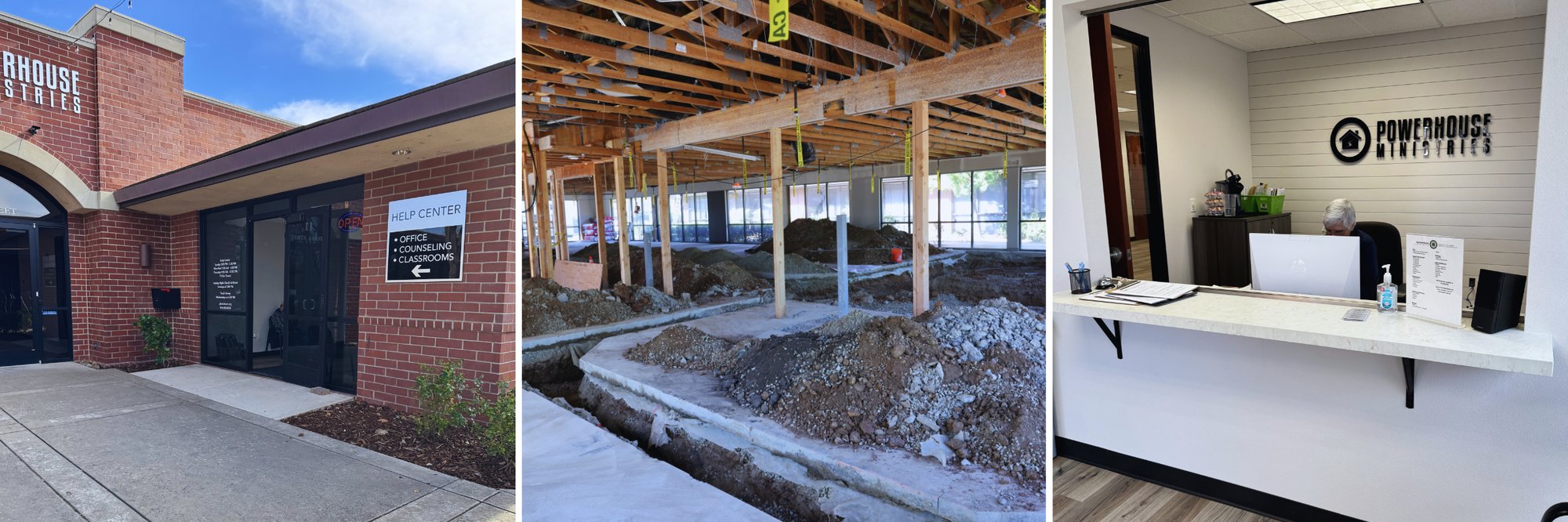
The organization purchased a centralized campus where residents can access counseling, case management, classes and other services in one location. The approximately $6 million project includes the acquisition and renovation of two buildings. Powerhouse is working to raise the remaining $1.6 million while maintaining its commitment to operating without debt.
The organization is also exploring a phased recovery project near Folsom Prison. Its first phase could create a 20-bed facility serving individuals leaving incarceration as well as people experiencing homelessness and addiction.
At the same time, Powerhouse is documenting and refining the recovery curriculum it has developed over three decades. The goal is not to create hundreds of beds in Folsom, but to make its model available to organizations in other communities.
Employers can also play an important role by offering opportunities to residents and graduates who are ready to work.
One graduate began an internship with a major healthcare organization that prohibited hiring people with felony records. Her performance was so strong that the organization changed its policy and hired her. Six years later, she remained employed, supported her family and had purchased a home. The policy change also created opportunities for others.
Powerhouse Ministries began because one person believed she was being called to step forward. Nearly 35 years later, that decision continues to create new futures for people who are ready to change and need a community willing to walk beside them.

Podcast Host
Broadcaster pro turned podcast leader, Jeff Holden created and hosts “The Non Profit Podcast Network”. A podcast and platform driven by his passion to serve, Jeff aims to revolutionize the way non-profit organizations communicate their stories for the betterment of their organizations.
Jeff made the successful leap from broadcast to digital audio in 2013 founding MultiPoint Content Strategies and Hear Me Now Studio. Under his leadership, these ventures have flourished, producing dozens of programs, increasing brand awareness and financial growth for his clients through authentic storytelling and coaching to directly target each company’s specific niche market.
Included in those programs are the award winning “Financial Sobriety” podcast and his own niche health podcast “Imperfect Heart”.
Join Jeff to learn how non-profits are working to solve seemingly impossible challenges today, and hear stories from the amazing people who are taking charge and leading their teams to accomplish their missions, grow toward their vision, and do it in the realm of their stated values.
When he's not hosting, producing, consulting, or spending time with family, you can likely find your host somewhere in the middle of nowhere practicing his two wheeled therapy peddling a steep climb in the Sierra foothills or on a local river attempting to keep his kayak upright.
Philanthropy Summit 2026 Wrap: Connecting Sacramento Through Generosity